Smart Textiles & Nanotechnology
Switzerland’s Schoeller Textil AG has a new medical textiles business called Schoeller Medical AG. The new subsidiary will focus on innovative healthcare projects and has launched its first product line of incontinence products.
The $4.2 trillion healthcare market is increasingly eating into the GDPs of nations, as people seemingly get fatter, do less exercise, and as populations become drastically older.
Vicki Barbur, VP Research and Development, M-Segment, at Cardinal Health will be presenting ‘Materials in Medicine: The Need for Smart, High Performance Textiles ‘at Smart Fabrics 2012. Organisers IntertechPira asked Vicki to share some of her insights on the industry, specifically in terms of medical applications for smart fabrics.
Hologenix, manufacturer of Celliant, a responsive textile technology for apparel, bedding and veterinary products, has announced the formation of a Science Advisory Board.
According to Schoeller Technologies, the efficacy its energear textile technology has been confirmed in an innovative test process at the Hohenstein Institute. The Swiss company also says that the technology has received positive feedback from German Olympian equestrian Bettina Hoy and her horses. energear is a new textile technology from Schoeller that is said to ensure that the energy radiated by the body is returned to it.
P2i was promoting its ion-mask technology at the ISPO Munich show last weekend (29 January - 1 February 2012).
Schoeller Technologies is launching a new fluorocarbon free textile finish which repels water at this weekend’s ISPO in Munich. The Swiss company, known for its innovative products, will exhibit its ecorepel finish for the first time at the Munich event which runs from 29 January until 1 February.
Disruptive RST technology company Alexium has begun the commercial roll-out of its flame retardant, oil and water repellent nylon, which it says has met key technical milestones for flame retardancy, water repellency and durability.
When digital inkjet printing first emerged in the 1990s, it was a welcome innovation for printing flags, banners, and POS textiles, made primarily of polyester. Using disperse inks for direct printing or water-based inks for sublimation, the technology was the answer for quick-turn, small runs or single pieces needed in the display business.
Polyester producer Teijin
Fibers announced today that it has decided to commercialize a new version of
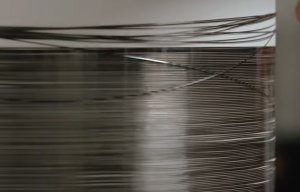
its Nanofront high-strength polyester nanofibre with a diameter of 400 nanometres,
or 22,500 times smaller than the cross-sectional area of a strand of hair, an
unprecedented achievement for a commercial polyester fibre.
The new version, which will be marketed by Teijin Fibers as
a finer version of its existing 700 nanometre Nanofront nanofibre, is expected
to expand the m
Wed 22nd Feb 2012
Most viewed
last 30 days- Digital inkjet printing holds future potential
- Adidas, MIT, Nike and Philips front Smart Fabrics conference
- Business Information: Technical Textile Markets reports
- Alexium rolls out flame retardant nylon treatment
- Business Information: Textile Outlook International reports
- Techtextil extends lead as innovation powerhouse
- Innovation in Textiles RESEARCHSTORE - for your market research needs
- Strong growth predicted as Techtextil India 2011 opens
- Schoeller launches water repellent eco finish
- Kertak Nanotechnology invests in Forcespinning technology