

Dealing with deadstock at Shein


Retailer on target to employ 5,000 in Poland as survey finds EU consumers can save up to €22 billion annually by purchasing clothing online.
28th January 2026
Innovation in Textiles
|
Europe
In December, global online fashion retailer Shein opened its new e-commerce logistics hub in Wrocław, Poland.
It is one of the most advanced facilities of its kind in Europe and will serve as Shein’s primary European logistics hub, enabling faster and smoother deliveries to more than 100 million customers across the continent.
It will also bring the total number of jobs the company supports in Lower Silesia to at least 5,000, making Shein one of the region’s largest job creators. The brand established its first European logistics operations in 2022 and has already created more than 3,000 jobs across its facilities in Poland.
“We are proud to officially open our new facility here in Poland, where Wrocław in particular, has been a strategic base for our European logistics since 2022,” said Leonard Lin, president of EMEA at Shein. “This strengthens our long-term commitment to the region, while helping us better serve our customers across Europe with faster, more reliable delivery.
Robotics and automation
“With advanced warehouse facilities, robust infrastructure, convenient transport links to key European cities and a large pool of qualified staff, Wrocław offers a very attractive hub for the logistics industry.”
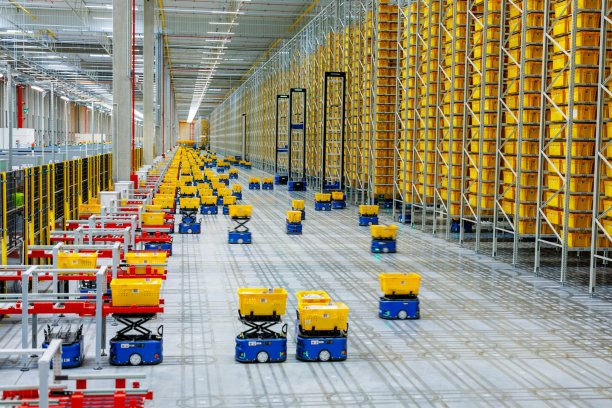
The hub features robotic picking systems and automated sorting lines that will enable faster throughput and operational efficiency while maintaining strict quality standards, setting a new benchmark for e-commerce logistics in Europe.
At full capacity it will cover 740,000 square metres of warehouse space in the Wrocław region and Shein collaborates with more than 170 local small and medium-sized enterprises in the areas of transport, packaging and professional services.
Online savings
Meanwhile, Shein has also been fighting back against its critics by commissioning a research study by Copenhagen Economics which concludes that EU consumers can save up to €22 billion annually by purchasing clothing online.
The study reveals that EU shoppers save an average of €12.80 per month by buying clothing online rather than in physical stores – equivalent to around 19% of average monthly household spending on clothing and footwear per capita across the EU.
Based on a survey of 24,995 consumers across all 27 EU member states, the research makes clear that price has become the dominant consideration when purchasing clothing. Almost seven in ten respondents, accounting for 68%, identified cost as the most important factor in their buying decisions. This emphasis on affordability and accessibility reflects the sustained pressure of rising living costs and the growing need for households to manage their budgets with greater care.
The findings underline a strong sensitivity to price across the European market, with seven in ten consumers stating that better prices are what they would miss most if online shopping were no longer available. A significant majority, 81%, believe that digital channels give them access to better deals than traditional retail, reinforcing the perception of online platforms as a vital tool for value-driven purchasing.
Convenience and choice
Beyond cost, convenience and choice play a central role. More than half of respondents said they would miss the breadth of available options if online shopping disappeared, while nearly one in two highlighted the convenience of shopping from home. Access to fashion that aligns with individual tastes is also a key benefit, with 64% reporting that online shopping allows them to find clothing that better fits their personal style.
Practical considerations such as delivery and returns remain influential, with a quarter of consumers ranking home delivery and easy returns as the second most important factor when buying clothes.
The financial benefits extend further, as one third of respondents said online shopping helps them save money, while almost the same proportion noted that it enables them to afford more essential items. Inclusivity also emerges as an important theme, with 30% stating that they would miss access to inclusive sizing options if online shopping were no longer available.
Taken together, the results paint a picture of a consumer landscape shaped by economic pressure, where value, convenience and inclusivity are no longer secondary considerations but central drivers of clothing purchasing behaviour across the European Union.

“At Shein, we’re committed to making fashion accessible and affordable for everyone,” says Leonard Lin. “Our on-demand model allows us to respond quickly to consumer preferences, offering a variety of styles. This study confirms what we see every day –
consumers value choice, convenience, and affordability. Through e-commerce, we’re helping make fashion more inclusive across the EU.”
The full study can be read here.

Business intelligence for the fibre, textiles and apparel industries: technologies, innovations, markets, investments, trade policy, sourcing, strategy...
Find out more