
Strongwell names distributor for Spain and Portugal


Première Vision emphasis on moving from research to manufacturing reality.
5th February 2026
Innovation in Textiles
|
Paris
At the Première Vision 2026 exhibition this week in Paris (February 3-5) CITEVE, the technological centre for the Portuguese textile and clothing industry, is presenting the results of be@t – a large-scale applied research project demonstrating how bio-based materials, circular processes and digital tools are being integrated into industrial textile production.
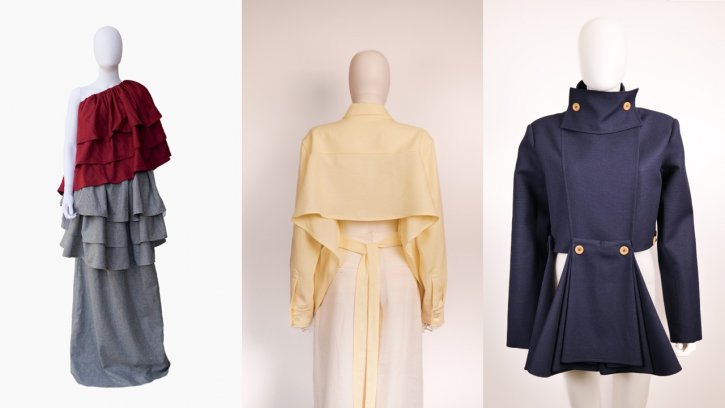
At its stand and in a dedicated talks programme, CITEVE is showcasing experimental garment demonstrators all manufactured in Portugal and co-developed with more than ten industrial partners across spinning, weaving, finishing and garment making, illustrating how non-fossil raw materials, recycling technologies and eco-design methodologies are moving from research to manufacturing reality.
The initiative positions Portugal as the country where scientific research, industrial capability and sustainability converge to deliver scalable, market-oriented solutions for the textile and apparel sector.
The silhouettes being presented at Première Vision were developed according to circular economy principles, with sustainability criteria embedded from the earliest design stages. Material selection, process optimisation and end-of-life considerations were integrated into product development.
The demonstrators incorporate a wide range of bio-based and recycled materials, including linen, viscose, lyocell, PLA, hemp, cork, pine-based components, recycled fibres and cotton blended with bioresidues such as grape pomace and spent brewery grain.
These prototypes translate research outcomes into tangible industrial applications, showing how emerging bioeconomy approaches can be implemented within existing manufacturing systems while reducing dependence on fossil-derived materials. Across the 12 designs, the dominant share of fibre content is bio-based or recycled, from linen blended with recycled wool to 100% organic cotton, lyocell, and fabrics that combine PLA or recycled polyester with cellulosic fibres, with all 12 looks achieving environmental and circularity indices above 70%.
Industrial ecosystem
Each silhouette is equipped with a Digital Product Passport (DPP), enabling traceability from the origin of raw materials to key environmental performance indicators. This approach enhances transparency across the value chain, responds to growing brand and consumer expectations, and anticipates upcoming European regulatory requirements related to sustainability and product traceability. All of the designs can be viewed here.
The work presented in Paris results from collaboration among approximately 20 companies across the textile and apparel value chain, highlighting the strength of Portugal’s vertically integrated, agile and innovation-driven industrial ecosystem. The be@t project overall brings together 60 entities, including SMEs, large companies, universities, R&D centres and consultancies, under CITEVE’s coordination.
Supported by Portugal’s Recovery and Resilience Plan and the European Union’s NextGenerationEU programme, be@t aims to accelerate the transition of the textile and clothing sectors towards circular, bio-based and digitally enabled models.

Business intelligence for the fibre, textiles and apparel industries: technologies, innovations, markets, investments, trade policy, sourcing, strategy...
Find out more