

Porsche first with braided carbon wheels


As Porsche Genuine Parts, the fabrics meet the sports car maker’s exacting quality standards.
5th December 2025
Innovation in Textiles
|
Germany
Porsche has reissued some of the interior upholstery fabrics of its classic sports cars dating back as far as 1963, including Pepita, Pasha and a range of tartans.
Pepita first became available as an option for the seats of the Porsche 356 in 1963, and two years later was also made available for the 911 F model. It consists of checks that are connected to each other by diagonal stripes and its name comes from the stage name of the 19th-century Spanish dancer Josefa Durán y Ortega – Pepita de Oliva. The design was first made famous by Christian Dior who used Pepita in a women’s collection in 1947.
In 1974, Porsche offered three tartans exclusively in the equipment list of its 911 Turbo and in 1976 they were also offered in the 911. At the International Motor Show (IAA) in Frankfurt in 1973, the car maker presented a study of a 911 RSR Turbo with seat centres and side panels in Black Watch tartan and a year later, Louise Piëch, daughter of Ferdinand Porsche, received her silver 911 Turbo ‘No. 1’ which had a red leather interior that featured McLaughlan tartan in the seat centres.
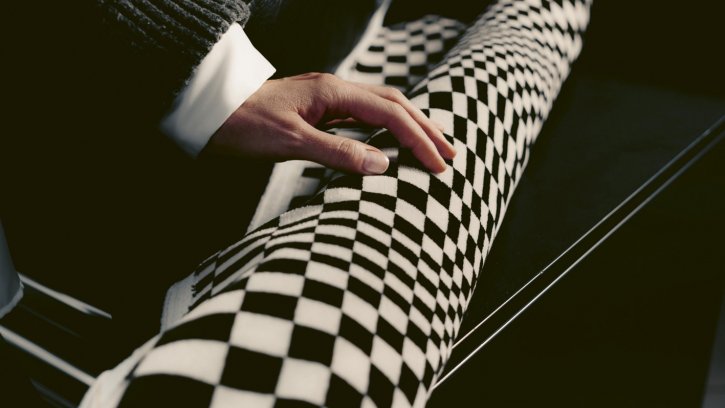
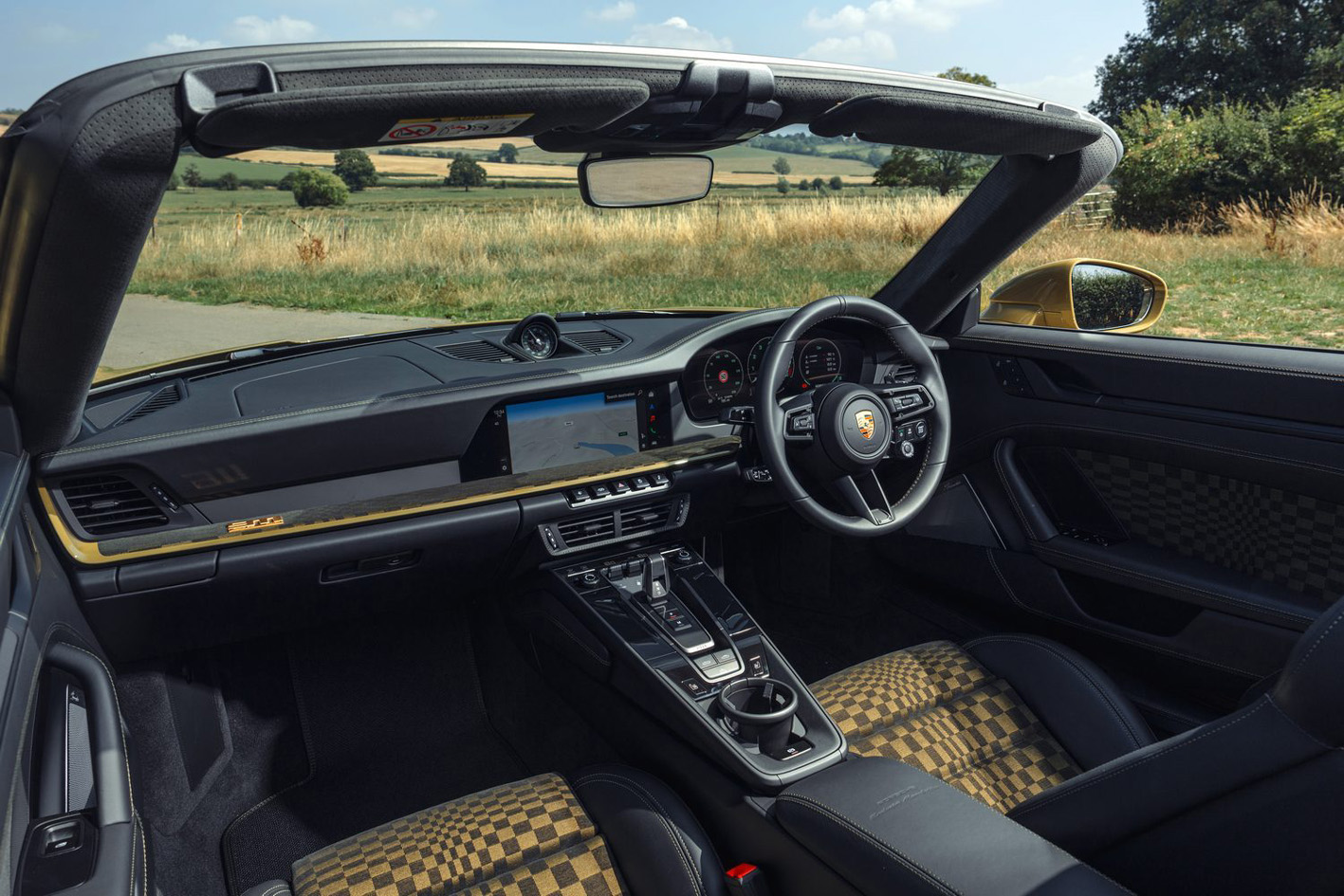
Inspired by waving chequered flags, the Pasha pattern pays tribute to the world of motorsport. First presented to the public in a Porsche 928 in 1977 in the south of France, its was also offered in the 911, 924 and 944 until the mid-1980s. The pulsating, lively pattern became one of the car maker’s most defining interior designs. Cleverly arranged rectangles of different sizes create a sense of movement in the pattern, and with the launch of the new 911 Spirit 70 this year, Porsche has revived the design in a new vehicle.
The fabrics are now available to order from Porsche centres or via the Porsche online shop.
“By reissuing these fabrics we are closing a gap, because most customers want to restore their historic or more recent classic cars to their original condition as closely as possible,” says Ulrike Lutz, director of Classic at Porsche. “It was particularly important to us in this project that we maintain our quality promise with the fabrics. Unfortunately, there are many imitations on the market that are either not at all suitable as seat fabric or lose their appearance after a short time. That’s why we want to offer our customers a tested original alternative again.”
As Porsche Genuine Parts, the fabrics meet the sports car maker’s exacting quality standards in terms of feel and durability as well as the accuracy of the often extremely complicated patterns and colour combinations. In addition, the newly issued fabrics undergo a series of tests for fire resistance, light and colour fastness and abrasion resistance. This makes them ideal for a wide range of applications in vehicle interiors, such as seat covers or side panels.
The main source of information for these new editions was the company archive. For illustrative purposes, Porsche also acquired rare stock items.
In the USA, for example, the experts found an untouched 911 seat that was upholstered in green tartan in 1975 and never found its way into a vehicle.
“Stored in a light-proof cupboard and therefore perfectly preserved, this new-old-stock item was gold dust for us,” says product manager Lukas Werginz.
Further colour variants, including pinstripes in the well recognised ‘orange lobster’ colour, are currently being planned.

Business intelligence for the fibre, textiles and apparel industries: technologies, innovations, markets, investments, trade policy, sourcing, strategy...
Find out more