
Techtextil Innovation Award 2017 to honour new developments


Opinion

Smarter, faster rules are required to match the pace of textile innovation.
19th January 2026
Adrian Wilson
|
Frankfurt, Germany
What Europe needs is a regulatory system that is as agile as its industry, according to António Braz Costa, general manager of CITEVE, the technological centre for the textile and clothing industry of Portugal.
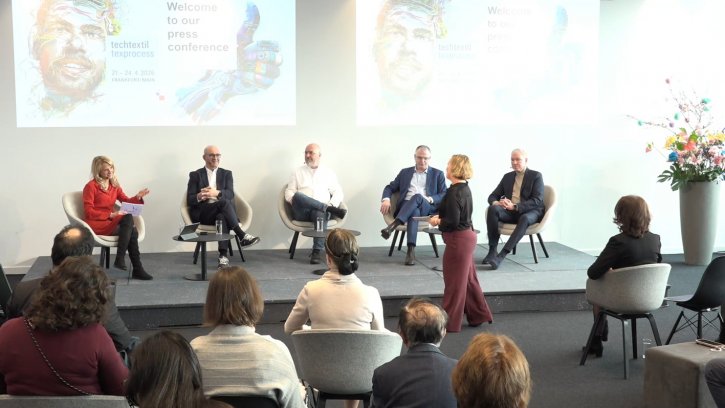
He was speaking during a press conference held in Frankfurt on January 15th to promote the Techtextil and Texprocess trade fairs which will be held co-currently in the German city from April 21-24 and cited, as an example, the introduction of Digital Product Passports (DPPs)
DPPs were scheduled to come into force at the beginning of this year, but have now been delayed for 18 months as the European Commission winds back on some of its more ambitious plans for the future of the textile industry.
“The European Commission has now realised that there is a big difference between establishing rules for European businesses and establishing them for the entire European market,” Costa said. “This is very important because the European textiles and apparel market is 70% based on imports and establishing the same rules everywhere is a huge challenge.
“The initial objectives of the DPP scheme were too big to initiate quickly and will involve millions of companies worldwide, and while the changes required to comply are not so big technically, it takes time. Many of the major European companies have worked dilligently to ensure systems are in place for DPPs, but now find they are not yet required. Such mandatory regulations are essential, but must be effective, quick and stable.”
Digital transformation
With certain caveats, Walter Wählt, chairman of the Texprocess Innovation Awards and senior director of advanced creation at adidas, welcomed the extent to which digital processes are already transforming development and production.
“3D design, virtual prototyping and AI can drastically shorten development cycles and reduce material use, yet despite all the technological momentum, people remain decisive – creativity, experience and judgment cannot be automated,” he said. “We are currently in the transition period of moving from a combination of digital and manual steps to full automation. It’s possible, for example, to fully realise fabric designs but the programmes still don’t know what components are in a garment, which have to be allocated manually.”
Another big step forward, he suggested, would be for software to understand the properties of different materials in order to incorporate recycling requirements into initial designs.
“Right now a garment could be 100% cotton but the thread holding it together polyamide, which should be flagged up at the initial design stage. If you ask suppliers of the systems, they are always ‘nearly ready’ with new solutions to address these needs.”
Locical response
The main message from participating conference panelists was that intensifying innovation is the industry’s only logical response to today’s current economic uncertainty, geopolitical tensions and continued restraint in investment.
“Innovation serves both as a lever for efficiency and a driver of growth,” said Elgar Straub, managing director of VDMA Textile Care, Fabric and Leather Technologies. “Digitalisation, automation and AI are enabling companies to conserve resources, produce flexibly and reposition themselves more effectively and competitively.”
“Techtextil and Texprocess are the places where ideas are not only presented but further developed into market-ready solutions,” added Olaf Schmidt, vice president textiles and textile technologies at Messe Frankfurt. “The Techtextil and Texprocess Innovation Awards make this strength tangible, giving new technologies visibility, credibility and often the impetus needed to turn research into concrete industrial applications and partnerships.”
“Sustainability, particularly when applied to high-performance materials and products, only becomes economically viable through a virtuous tandem of research and innovation,” António Braz Costa concluded. “Recycling technologies, circular solutions or entirely new materials are meaningless if they remain confined to the lab. What matters is their translation into real industrial processes. Trade fairs such as Techtextil and Texprocess are critical in bridging research and the market.”

Business intelligence for the fibre, textiles and apparel industries: technologies, innovations, markets, investments, trade policy, sourcing, strategy...
Find out more