
Coloreel introduces 100% recycled thread


“A sustainability fig leaf covering fashion’s deepening dependence on synthetic materials,” study claims.
5th January 2026
Innovation in Textiles
|
The Netherlands
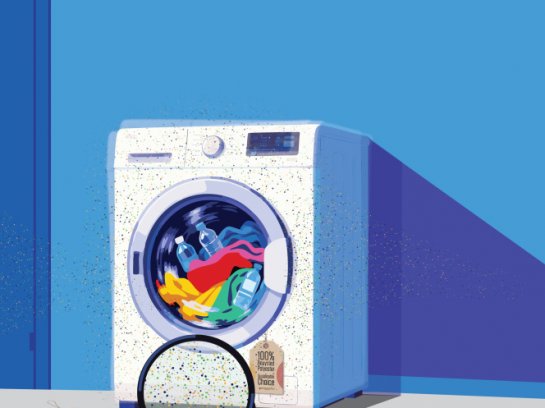
New laboratory research published by the Netherlands-headquartered non-profit Changing Markets Foundation finds that recycled polyester creates 55% more microplastic pollution particles on average during washing than virgin polyester, which is less brittle. The particles were also found to be nearly 20% smaller, so more able to spread in the environment and cause harm.
Polyester is by far the cheapest mass market fibre, costing half as much to produce per kilo as cotton. Its low cost is central to fast fashion and has become the fibre of choice since 2000, clearly dominating a steep rise in overall fabric production, which is today at a record high. The ultra fast fashion brand Shein, which releases thousands of new clothing lines each day, depends on polyester for 82% of its range. Just as clear is the consequence of cheaper clothing in terms of waste and pollution. The average consumer now buys 60% more clothing than in 2000, but keeps it half as long. An estimated 120 million tons of clothing were discarded last year.
A single laundry cycle can meanwhile release up to 900,000 microplastic fibres and microplastics are now so widespread they are found in the most extreme locations and circulate in all environments.
The study, conducted by the Microplastic Research Group at Cukurova University in Turkey, focused on a relatively small number of garments from five major brands, and the results provide only an indication of likely pollution rates. T-shirts, tops, dresses and shorts sold by Adidas, H&M, Nike, Shein and Zara were tested. These brands are among the fashion world’s biggest producers and users of synthetic fabrics, according to a recent Changing Markets survey.
Nike polyester clothing was found to be the most polluting, for both virgin and recycled fabric. The brand’s recycled polyester shed over 30,000 fibres per gram of sample clothing on average, nearly four times H&M’s average and over seven times Zara’s average.
Shein clothing also stood out in that its recycled polyester garments shed microplastics at around the same rate as its virgin polyester clothing. Changing Markets suspects some of the tested clothes labelled as recycled polyester may actually have been made of virgin polyester.
“The fashion industry has been selling recycled polyester as a green solution, yet our findings show it is deepening the microplastic pollution problem,” says Urska Trunk, senior campaign manager at the Changing Markets Foundation. “Our report exposes recycled polyester for what it is – a sustainability fig leaf covering fashion’s deepening dependence on synthetic materials. Smarter design tweaks and end-of-pipe fixes will only scratch the surface. Real solutions mean slowing and phasing out synthetic fibre production and stopping the diversion of plastic bottles into disposable clothing.”
Even before today’s findings, environmentalists concluded that fashion’s recycled polyester drive is largely greenwash. Polyester clothes recycling systems are seen as “important” but also “in development” and only able to process “around 2% of all recycled polyester”. In contrast, the drinks sector can repeatedly reuse waste plastic bottles, but now has to compete with fashion brands for them. Meanwhile, fashion’s use of virgin polyester is growing so fast that the share of recycled polyester last year actually fell. The low cost of synthetic fabrics, now being produced at record highs, has driven huge overproduction, overconsumption and waste.
The report Spinning Greenwash: How the fashion industry’s shift to recycled polyester is worsening microplastic pollution is available here.

Business intelligence for the fibre, textiles and apparel industries: technologies, innovations, markets, investments, trade policy, sourcing, strategy...
Find out more