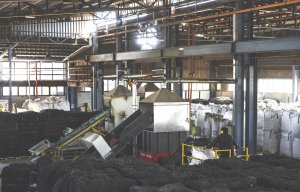


Discarded fishing nets as new resins


Collaboration with Sea2See ensures the supply of recovered nets from Ghana.
30th January 2026
Innovation in Textiles
|
Spain
Spanish plastics technology centre Aimplas is collaborating with the companies UBE and Ziknes and the University of Valencia on the REDES4VALUE project, to transform abandoned fishing nets into new products.
The shared objective is to close the life cycle of polyamides and reduce marine pollution through industry-ready solutions.
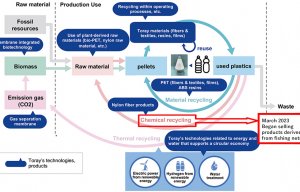
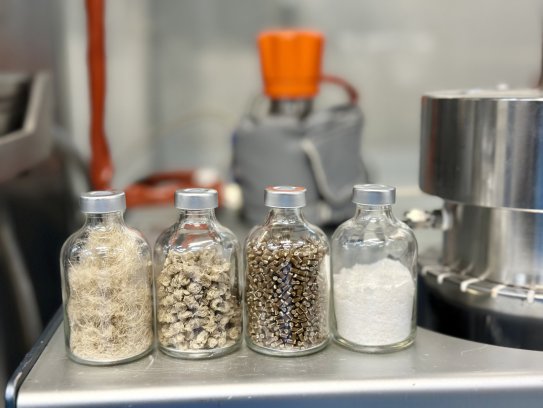
Although many nets are made of polyethylene or polypropylene, the project focuses on polyamide nets as a material with great potential for chemical recycling. Its molecular structure allows the recovery of monomers such as caprolactam, enabling the production of new polyamides with properties virtually identical to those of virgin materials.
“We are achieving optimised conditions for depolymerising fishing nets and recovering monomers with purities above 95% in some laboratory-scale streams, and over 80% at pilot scale,” explains Nairim Torrealba, a researcher in chemical recycling at Aimplas. “This will allow us to repolymerise and obtain new polyamides with quality equivalent to virgin material.”
Recycled polyamides are intended for sectors such as packaging, agriculture, automotive and 3D printing. Companies such as UBE are already analysing their commercialisation and Ziknes is adapting its equipment to validate large-format parts.
“These materials have immediate industrial applications and a clear sustainability advantage over conventional polyamides,” says Torrealba.
Disruptive technology
REDES4VALUE is advancing processes such as hydrothermal depolymerisation, ionic liquid-assisted solvolysis and reactive extrusion, as well as carrying our comprehensive life cycle and feasibility assessments. One of the main challenges of the project is the treatment of highly degraded nets with a high presence of impurities, but the results are very promising.
Collaboration with the Sea2See brand has ensured access to fishing nets recovered in Ghana since 2019 and has been key to structuring the project’s circular value chain from the waste source.
“Without this supply of material, it would not be possible to move forward,” says Torrealba. “The nets that arrive from Ghana are essential for validating the processes and obtaining real results.”
Within the project, Aimplas is responsible for chemical recycling, UBE for scaling and repolymerisation, Ziknes for 3D printing validation and the MATS group at the University of Valencia (MATS-UV) for solvolysis and kinetics studies.
“Our goal is to consolidate a chemical recycling line that can be applied to complex waste and demonstrate that it is a real and necessary solution,” Torrealba concludes.
This initiative is funded by the Valencian Institute of Competitiveness and Innovation (IVACE+i), with co-financing from the European Regional Development Fund (ERDF).
Business intelligence for the fibre, textiles and apparel industries: technologies, innovations, markets, investments, trade policy, sourcing, strategy...
Find out more