

CRP Technology to speak at Composites in Motorsport


Alliance for European Flax-Linen & Hemp members now progressing to series production in the automotive industry.
17th December 2025
Innovation in Textiles
|
Paris
The automotive industry is witnessing a fundamental shift in natural fibre composite adoption, aligned with Europe’s broader vision for a sustainable bioeconomy by 2040.
Flax and hemp reinforced bio-based composites have successfully transitioned from motorsport and concept demonstrators to series production applications, marking a critical milestone in sustainable lightweighting and demonstrating how bio-based materials can provide fossil-free alternatives.
This development directly supports the Alliance for European Flax-Linen & Hemp’s objective of establishing European flax and hemp as the preferred sustainable premium fibres worldwide, particularly in technical composite applications.
Value chain expansion
As global automotive manufacturers intensify efforts to reduce lifecycle emissions and source sustainable materials, flax and hemp composites offer domestically produced, performance-validated solutions that enhance Europe’s economic resilience while supporting the continent’s leadership in sustainable bio-based innovation.
The expanding Technical Section of the Alliance – now exceeding 25 organisations spanning the complete value chain from agriculture to finished components – provides the collaborative infrastructure necessary for continued automotive penetration and demonstrates the integrated supply chain model essential for bioeconomy success.
Series production
The progression from racing to road cars demonstrates systematic technical validation. BMW, Porsche and Bcomp pioneered flax composite applications in motorsport using ampliTex and powerRibs materials and the 2022 BMW M4 GT4 extended this to closer-to-production applications. This rigorous motorsport testing has culminated in BMW’s 2025 announcement to integrate flax composites extensively into series production M cars, including exterior components – a world first for natural fibre materials in production automotive bodywork.
This validation methodology proves flax materials meet the demanding mechanical, thermal and durability requirements of modern automotive engineering. The material’s proven track record in competition environments provides OEMs with confidence in long-term performance under real-world conditions.
Industrial scale
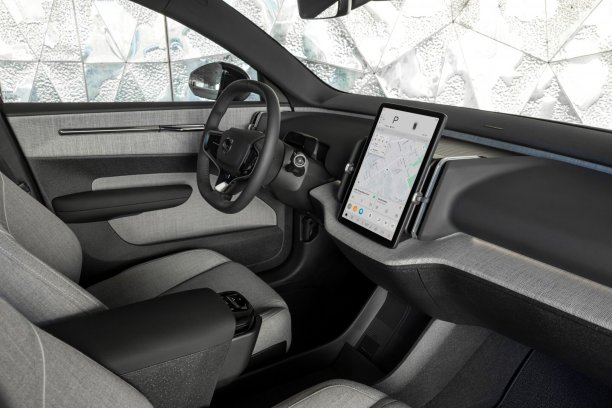
Current production infrastructure demonstrates readiness for volume manufacturing. Volvo’s EX30 electric vehicle offers Bcomp flax composite interior panels as standard equipment in select markets, representing the first mainstream production implementation.
Tier 1 supplier SFG Composites operates eleven presses specifically configured to process an annual 6,000 tons of natural fibres. Bcomp’s recent $40 million Series C funding round targets automotive production scaling, with confirmed industrial-scale applications at Volvo and Polestar.
Both ampliTex technical fabrics and powerRibs reinforcement grids function with conventional compression moulding and resin transfer moulding equipment, enabling OEMs to adopt flax composites without capital-intensive tooling modifications.
Pre-impregnated thermoplastic variants with polypropylene provide ready-to-use solutions for high-speed production lines.
Performance targets
Ecotechnilin, headquartered in Valliquerville, France, focuses specifically on natural fibre-reinforced polymer composites for automotive interior applications, targeting lightweighting whilst maintaining acoustic and vibrational performance characteristics demanded by OEMs. The company has recently added a new production line to its Polish facility, confirming that strong customer demand – primarily from automotive customers – is fuelling its expansion to a new annual capacity of 13,000 tons.
Hemp fibres are also forming a key part of the high-volume automotive production sector with NAFILean, a new material created by Materi’act, the sustainable materials division of Nanterre, France-headquartered Forvia, featuring 20% natural hemp fibres with polypropylene. This enables a 100% recyclable composite that significantly reduces both weight and CO2 footprint in car interiors without compromising mechanical performance or technical specifications. NAFILean has been delivering a lightweight, low environmental impact, interior material solution that successfully meets the performance targets of the automotive market.
Environmental advantages
Technical performance data supports commercial adoption. Bcomp’s thermoplastic powerRibs systems, for example, achieve up to 50% weight reduction and 70% plastic reduction in interior panels compared to conventional materials, directly reducing vehicle mass and fuel consumption. European-sourced flax reinforcements provide CO2 reduction across the material lifecycle whilst maintaining mechanical properties suitable for both structural interior components and visible exterior applications.
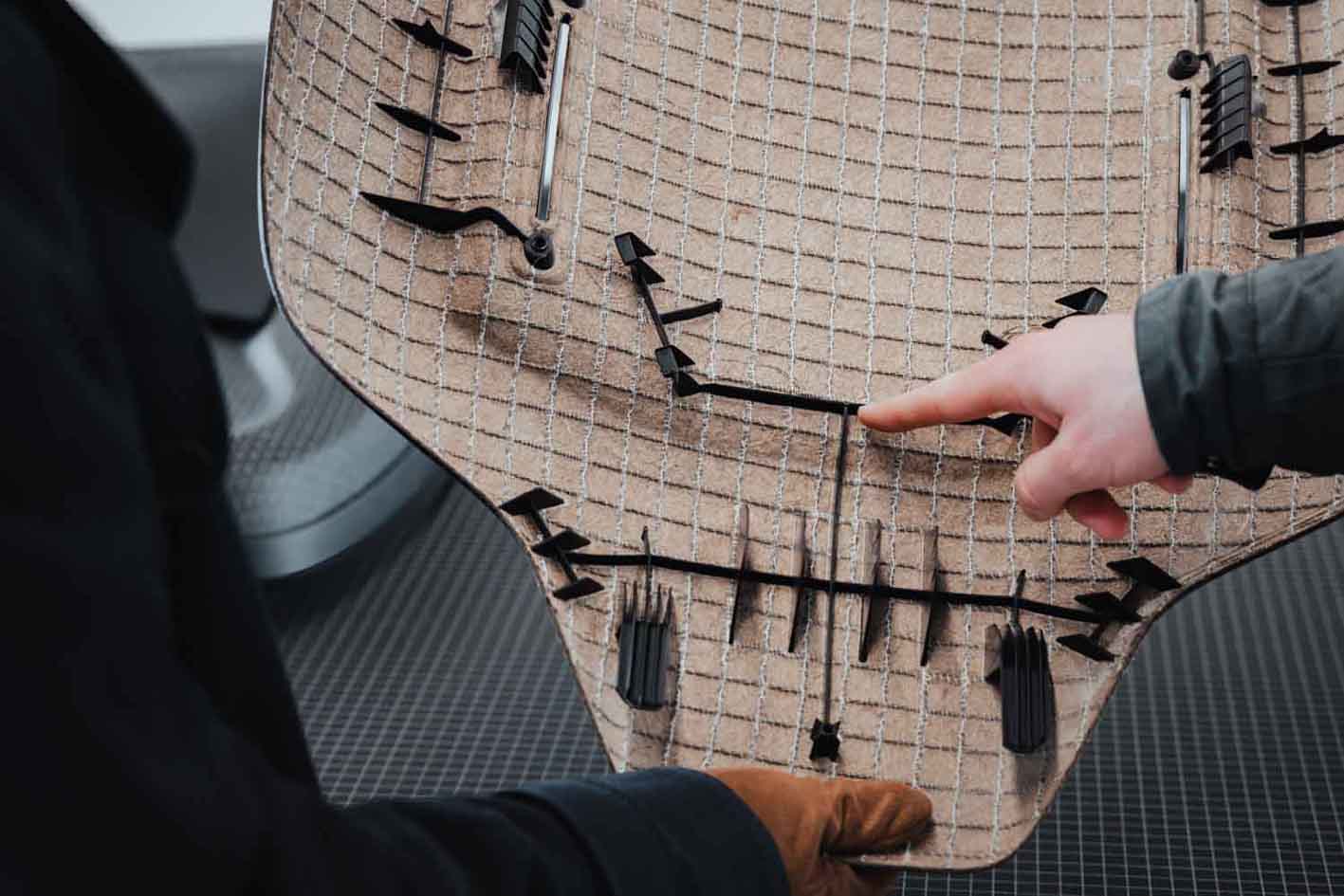
Flax composites also offer design flexibility previously unavailable with synthetic fibres. The natural aesthetic of flax weaves creates functional and visual surfaces in single-layer applications, enabling premium interior finishes while eliminating secondary trim operations. This positions flax composites as both an engineering solution and a brand differentiation element for sustainability-focused vehicle programmes.
LIUX, a Spanish sustainable mobility startup, is also pioneering the use of flax fibre composites in electric vehicle development, with its Animal and Big models featuring bodywork and chassis components made largely from flax fibres, formed and moulded with bio-based resins. Working in collaboration with Malaysia-headquartered Swancor, LIUX uses flax fibre combined with EzCiclo recyclable resins to create parts that can be recycled through a simple degradation process. By creating vehicles that weigh around 50% less than the average urban vehicle, LIUX clearly demonstrates that flax fibre composites can deliver both environmental and performance benefits in automotive applications.

Strategic partnerships
The transition to series production reflects coordinated development across the Alliance for European Flax-Linen & Hemp member network and strategic partnerships demonstrate value chain integration.
Germany’s Saertex, for example, has formalised a collaboration with Terre de Lin for non-crimp fabric development, combining Saertex textile engineering expertise with Terre de Lin’s agricultural capacity. Porcher Industries has similarly partnered with Terre de Lin to develop Polypreg Flax thermoplastic reinforcements using Terre de Lin rovings, enabling ultrafast thermocompression moulding for automotive semi-structural components. These partnerships between textile processors and agricultural specialists address the historical inconsistency issues that previously constrained automotive qualification.
Safilin, another Alliance member specialising in technical flax fibre development, maintains dedicated R&D facilities investigating flax fibre properties for composite applications.
Circular Structures and its brand Greenboats have been pioneering the application of natural fibre composites (NFC) across all industrial sectors. Their experience in designing and manufacturing high-performance NFCs has demonstrated real-world applications that provide automotive manufacturers with validated material specifications, processing knowledge, and performance data that reduces development risk and accelerates time-to-market. Through strategic partnerships with flax fibre suppliers, resin manufacturers, and automotive tier suppliers, Greenboats and Circular Structures have now created an ecosystem that supports the entire value chain, making NFCs a practical and commercially viable alternative to traditional materials in automotive applications.

Strategic alignment
These developments align precisely with the Alliance for European Flax-Linen & Hemp’s strategic framework. The organisation’s mission to accelerate the industrial adoption of European-grown flax in high-performance composite applications is demonstrably progressing. To support it’s members, the Alliance’s lifecycle assessment tool, developed in response to the European Commission’s Product Environmental Footprint methodology, provides standardised environmental data essential for automotive sustainability reporting. This addresses OEM requirements for quantified, auditable emissions data across material supply chains. Meanwhile Alliance certification, via the Masters of Flax Fibre programme, guarantees the origin and the traceability of the flax fibres – prerequisites absent from earlier generation natural fibre materials.

Business intelligence for the fibre, textiles and apparel industries: technologies, innovations, markets, investments, trade policy, sourcing, strategy...
Find out more