
New & Next university competition goes global


Refreshingly multi-faceted concepts to be found at the New Talent Area in Frankfurt.
2nd February 2026
Innovation in Textiles
|
Frankfurt, Germany
There were many bold ideas from young UK designers on display within the New Talent Area at the recent Heimtextil home textiles show in Frankfurt from January 13-16.
Organised and curated by Jennifer Castoldi, CEO of London-based Trendease, the showcase provided a professional platform for the up-and-coming textile designers to present their work, connect with global brands and gain visibility among international buyers, studios and industry leaders.
Tailoring plastic
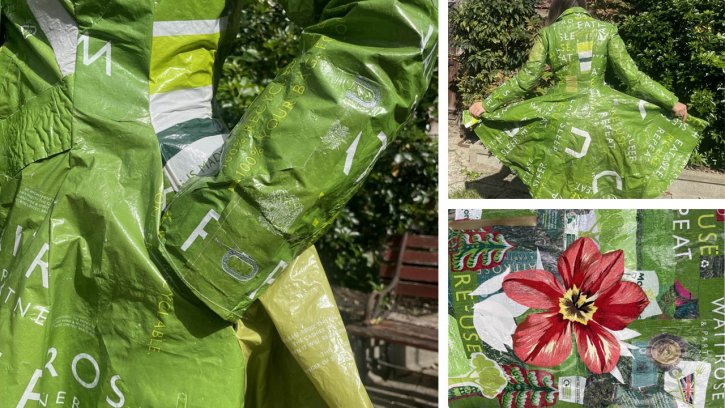
The thought that goes into the designs they are coming up with was evident in such creations as the plastic bag coat devised by Emily Cox, who also specialises in embroidery and surface design.
It was created using the McCall’s M6800 pattern consisting of 24 panels for the outer layer and 18 panels for the inner lining, to create impressive fit and drape.
“I constructed it in a similar way to a tailored jacket pattern and the panels were assembled through machine embroidery,” she explained. “To prepare the material, I ironed and melted the plastic bags together to create larger sheets before cutting the pattern pieces. While sewing, I used clips instead of pins to avoid puncturing the plastic unnecessarily, along with a cotton thread, a thicker needle and a slow machine speed to reduce stress on the material. The outer layer uses the exterior surface of the bags, while the lining uses the inside of the bags to create a subtle contrast.
“In terms of embroidery, the plastic is surprisingly easy to stitch into, particularly when using a stronger needle. There is a risk of tearing if the area is too thin or heavily worked, but this can be managed by melting additional layers of plastic on top to reinforce weaker sections and add stability before stitching.”
Diverse materials
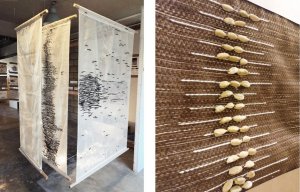
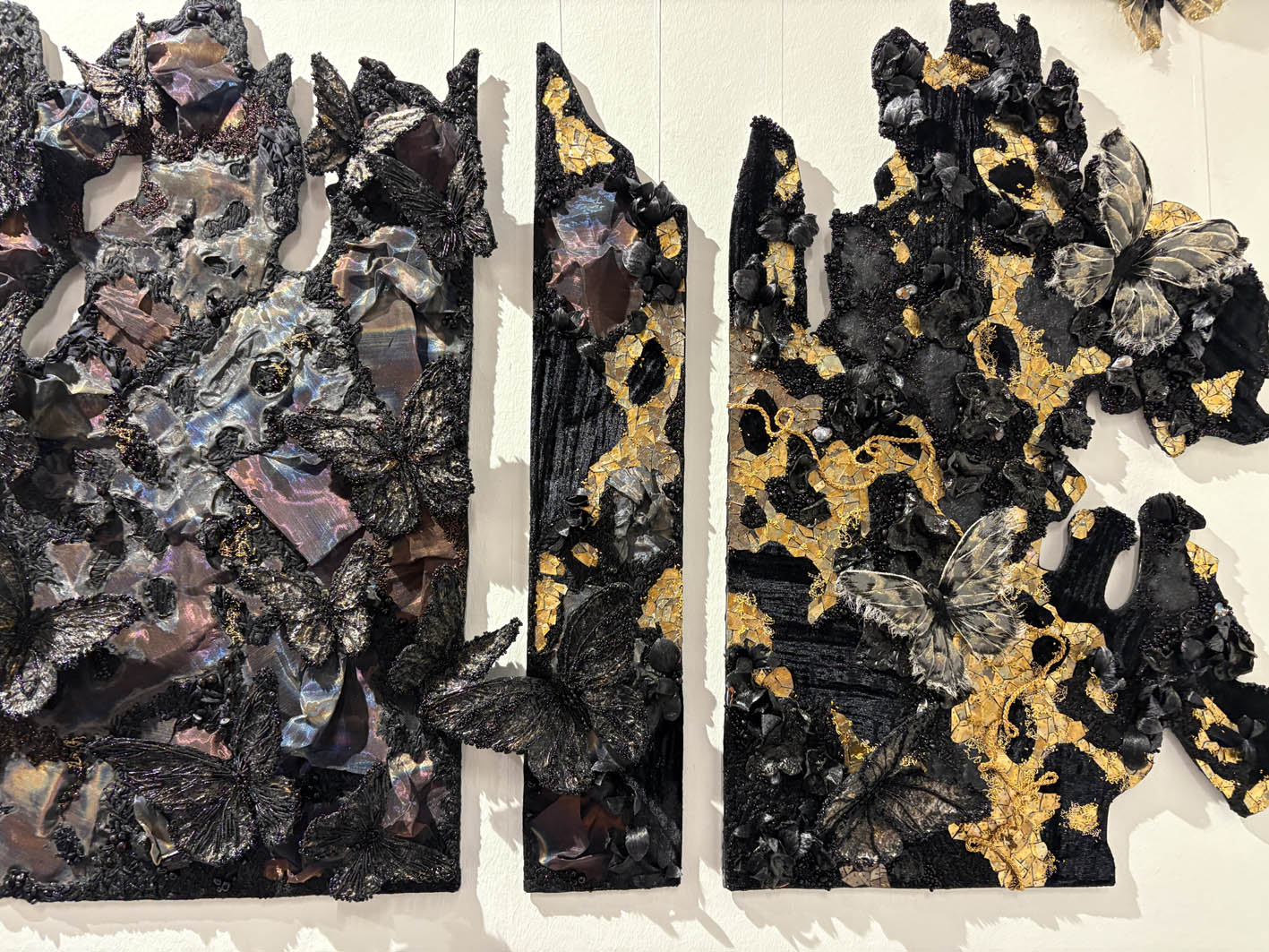
Another notable display was from Severina Seidl, whose decorative panels are painstakingly assembled from a gamut of materials including beads, goldwork wire, organza, silicone and lace, cotton silk and rayon threads, steel wire mesh, mulberry bark, PVC, gold leaf and air-drying clay. The designs draw their themes from dark novels and folk tales and are immediately compelling.
Building on her research project into colour, materials and finishes (CMF) for post-pollution homes meanwhile, Ciara Harris, has explored ‘Biospheric Design’, in which home interiors, which were once considered inert, can come alive and play an active role in design systems.
“Materials in our homes are no longer simply there for aesthetics or comfort, but being designed to enhance the health of the occupants and give back to the environment through innovative responsive qualities,” she explains.
Speculative guide
Harris has subsequently compiled the Biospheric CMF Design Handbook, as “a speculative guide and living document for designers in the year 2050, envisioning how we can redesign our home textiles for improved air quality, supporting our health instead of compromising it.”
These diverse ideas were just the tip of the iceberg in terms of the refreshingly multi-faceted concepts to be found at the New Talent Area in Frankfurt.
“At Heimtextil 2026, we really created a space where creativity meets opportunity,” said Jennifer Castoldi. “Heimtextil is where the future of textiles begins and this was a sensational success. These emerging designers and researchers will make the world a better place through their work. A huge thank you goes out to all who participated and for the support of Messe Frankfurt.”

Business intelligence for the fibre, textiles and apparel industries: technologies, innovations, markets, investments, trade policy, sourcing, strategy...
Find out more